Background Briefing has a new home at BackgroundBriefing.org.
Please visit and bookmark the new site. You can search show archives here.

Background Briefing has a new home at BackgroundBriefing.org.
Please visit and bookmark the new site. You can search show archives here.
2016 Program Archive
|
|
LISTEN TO FULL PROGRAM | |
|
|
We begin with the surprise firing of the FBI Director James Comey by Donald Trump who ironically Hillary Clinton thinks more than anyone, with perhaps the exception of Vladimir Putin, helped defeat her and elect Trump president. Laurie Levenson, Chair in Ethical Advocacy at the Loyola Law School who served for eight years as an Assistant United States Attorney and has written widely on criminal law, criminal procedure and the relationship between the law and the media, joins us. We will discuss the similarities of Trump’s firing of Comey with Richard Nixon’s Saturday night massacre as the Watergate inquiry was closing in on the embattled president, just as the Russian investigation seems to be haunting the current president who is the subject of a number of investigations including some by the FBI. We also assess the likelihood that the qualifications of whoever is appointed to replace Comey will tell all, particularly if that person is a crony of Trump’s like Chris Christie or Rudy Giuliani.
|
 |
|
|
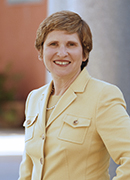
Then we examine whether the election of Moon Jae-in, a human rights leader and former student activist in South Korea, after a decade of conservative rule, is a backlash against Donald Trump who the South Korean people apparently fear more than North Korea’s erratic young dictator Kim Jong-un. A former State Department Senior Analyst, Stephen Noerper, Senior Director at the Korea Society and a fellow at the Weatherhead East Asia Institute and a professor at Columbia University joins us to discuss the likelihood of a renewal of South Korea’s “sunshine policy” towards the North. We will assess the expectations of the young South Korean voters who support their new Leftist leader because of his promises to deal with youth unemployment and income inequality and to curb the power of the family-run conglomerates like Samsung and Hyundai. |
 |
|
|
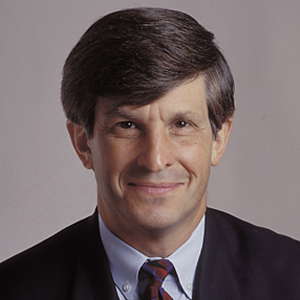
Then finally we speak with Allan Lichtman, a political historian at American University and author of “The Keys to the White House: A Surefire Way to Predicting the Next President”, a prediction system which has correctly predicted the outcomes of all presidential elections since 1984 including the last election in which, against all odds, Allan predicted a Trump victory. We discuss his latest book, “The Case for Impeachment” and investigate the many scenarios that could lead to the removal of America’s 45th president. |
 |
|
|
LISTEN TO FULL PROGRAM | |
|
|
We begin with the hearing today before a Senate Judiciary Subcommittee on Russian interference in our election at which former Acting Attorney General Sally Yates and former Director of National Intelligence General Clapper testified. Michael Fuchs, a Senior Fellow at the Center for American Progress who served as deputy assistant secretary of state and as a special advisor to the secretary of state for strategic dialogues and as a member of secretary’s policy planning staff, joins us. We discuss President Trump’s attempt to intimidate the key witness Sally Yates and her testimony about efforts to warn an apparently unconcerned White House that the National Security Advisor Michael Flynn could be blackmailed by the Russians. This following President Obama’s personal warning to the president-elect in their first White House meeting that Trump should not hire Flynn as his NSC Advisor, a warning that fell on deaf ears.
|
 |
|
|
Then we speak with Uri Friedman, a staff writer at The Atlantic who covers global affairs and was previously the deputy managing editor at Foreign Policy. He joins us to discuss his latest article in The Atlantic “Is France’s Political Crisis Just Beginning?” and how the hacking of the French election was brought up in the hearing today in the context of what the U.S., France and Germany can do to prevent further Russian interference in their elections. We assess what leverage the Europeans have given their dependence on Russian energy and what measures the U.S. might take. |
 |
|
|
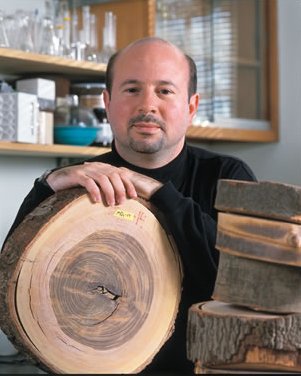
Then finally we look into the firing of 5 scientists on the EPA’s Board of Scientific Counselors with the likely purge of up to a dozen on the 18-member board who are to be replaced by representatives from polluting industries because, according to the EPA spokesman, Scott Pruitt the Administrator “believes we should have people on this board who understand the impact of regulations on the regulated community”. Joining us is Michael Mann, the Director of the Earth Systems Science Center at Penn State University who shared the Nobel Peace Prize with others on the Intergovernmental Panel on Climate Change and is the author of ”The Madhouse Effect: How Climate Change Denial is Threatening Our Planet, Destroying Our Politics, and Driving Us Crazy”. We discuss a Stalinist takeover of the government by climate deniers who are imposing fake science on a dangerously real problem. |
 |
|
|
LISTEN TO FULL PROGRAM | |
|
|
We begin with the French presidential elections and as the polls are now closing we will speak with an expert on French politics, European social democracy and the French Socialist Party, Philippe Marliere, a professor of French and European politics at University College, London. He joins us to discuss the results as they come in and the impact of the last-minute data dump of hacked internals files from the Macron campaign meant to help his opponent Le Pen. We also examine the role of Wikileaks who provided the largest boost of attention to the Macron files on Twitter along with bots from far-right groups here in the United States. Reminiscent of the DNC hack by “Fancy Bear” which has been attributed to the APT -28 group tied to the GRU, Russian Military Intelligence, we assess whether the attempt to mix stolen data with fake news will backfire on a French electorate that is increasingly jaded by political squabbling and mudslinging. |
 |
|
|
Then we examine the results which are expected to give Macron a wide margin of victory and look into the possibility of further interference in the upcoming German election by Russia. Mona Krewel, A Professor of Government at Cornell University and a Fellow at the Mannheim Center for European Social Research at the University of Mannheim in Germany who is an expert on the relation between media and politics, joins us to discuss whether the attack on Macron minutes before the media blackout in France had it intended effect. |
 |
|
|
Then finally we assess whether the recent Rose Garden ceremony of a group of smug, smiling “Christian” white men celebrating the passage of a bill in the House that will hurt and harm millions of their fellow Americans will backfire. Stephan Schwartz, a futurist and columnist for Explore and the publisher of the Schwartzreport.net and author of “The 8 Laws of Change”, joins us to discuss the death rattle of white privilege as demographic trends indicate that simply being born white will no longer confer privilege in the future. |
 |
|
|
LISTEN TO FULL PROGRAM | |
|
|
We begin with yesterday’s apparent attempt by Republican senators in the Comey hearing to make the case that there is no evidence of connection or collusion between the Trump campaign and the Russians, even though today before the House Intelligence Committee Comey and the head of the NSA gave secret testimony about the further extent of proven Russian interference in our election directed by Putin to help elect Trump. James Henry, an investigative economist and lawyer who is a Global Justice Fellow at Yale and co-founder with David Cay Johnston of DCReport.org, joins us to discuss how the opposite is true to what Senator Grassley tried to dismiss as the disproven Steele dossier. In fact the Steele dossier continues to be proven factual by press investigations and presumably inside the intelligence agencies there is even more supporting evidence that has yet to come out. We also look into a just-released Dutch investigative documentary that reveals connections between Giuliani, kleptocrats from the former Soviet Union, and Trump.
|
 |
|
|
Then we examine the passage today in the House of the second attempt to repeal and replace Obamacare on a vote of 217 to 213, with 20 Republicans voting against it. A leading authority on the politics of healthcare and healthcare reform, Jonathan Oberlander, a professor of Social Medicine and Health Policy and Management at the University of North Carolina joins us. We discuss the passage of what is essentially a tax cut bill which has nothing to do with healthcare reform since it punishes the poor by cutting Medicaid in order to make up for a tax cut for the rich. And while conservatives argue Americans have no right to healthcare, there is a right not to die in the street and to get emergency care treatment, which is the least effective and most expensive form of healthcare. |
 |
|
|
Then finally, with Jerry Falwell Jr proclaiming on this National Day of Prayer that “I think evangelicals have found their dream president”, we speak with Diane Winston, who holds the Knight Chair in Media and Religion at the University of Southern California’s Annenberg School for Communication and publisher of Religion Dispatches. She joins us to discuss today’s Rose Garden signing ceremony by President Trump of an Executive Order weakening the Johnson Amendment that separated church and state so that now evangelical pastors can endorse or oppose political candidates from the pulpit.
|
 |
|
|
LISTEN TO FULL PROGRAM | |
|
|
We begin with the testimony today of FBI Director James Comey before the Senate Judiciary Committee and speak with Nick Akerman, a former federal prosecutor who was an Assistant Special Watergate prosecutor and was an Assistant United States Attorney in the Southern District of New York. He joins us to assess the answers to Senator Feinstein’s questions about Comey’s role in tipping the election for Donald Trump and his testimony that he went public with the letter that Hillary Clinton and Nate Silver claim lost her the election because failure to do so required an “act of concealment” that “would have been catastrophic”. However Comey did not elaborate and was not asked why it would have been catastrophic and, as he said, “disastrous for me personally”. |
 |
|
|
Then we examine further Comey’s testimony, in particular his efforts to distinguish between journalism and Wikileaks which he labelled as “intelligence porn”, elaborating that “a huge portion of Wikileaks’ activities has nothing to do with legitimate newsgathering, informing the public and commenting on important public controversaries, but is simply about releasing classified information to damage the U.S.” Michael Kelly, an editor at Yahoo Finance who was previously the front-page editor at Business Insider where he reported on Military and Defense issues, joins us to assess how much Wikileaks has crossed the line between journalism and being a conduit for a foreign intelligence service. |
 |
|
|
Then finally we are joined in the studio by Laura Poitras, who made the film “Citizen Four” about Edward Snowden. She has a new film coming out in theaters nationwide on Friday, “Risk”, which is about Wikileaks founder Julian Assange. She joins us to discuss her film that has taken years to complete which explores the territory between the message and the messenger. We look into whether Assange is simply a publisher who is not responsible for the content he releases which the mainstream press eagerly prints, and whether, when it comes to Snowden and Assange, it is possible to be both a hero and a traitor. |
 |
Taking listeners deep into the underlying issues and forces that shape our world.
Listen Live on KPFK FM-90.7 - Los Angeles (98.7 FM Santa Barbara, 99.5 FM China Lake, 93.7 FM San Diego)
Listen on Itunes
LA: Background Briefing Monday-Thursday 5pm-6pm and Sundays 11am-12pm
NY: on WBAI 99.5 FM Monday-Friday 5am-6am and rebroadcast at 10am
Also heard on:


 RSS Latest Radio Programs
 Pacifica App