Background Briefing has a new home at BackgroundBriefing.org.
Please visit and bookmark the new site. You can search show archives here.

Background Briefing has a new home at BackgroundBriefing.org.
Please visit and bookmark the new site. You can search show archives here.
|
|
LISTEN TO FULL PROGRAM | |
|
|
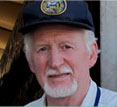
We begin with the growing use of refugees as bargaining chips following the deal between Turkey and the E.U. with countries like Niger extorting $1.2 billion to stop the flow of refugees into Libya and the Mediterranean and Kenya threatening to close down the massive Daadab camp of refugees then deporting 600,000 Somalis back to their war-torn country. Joining us is James Jennings, founder and President of Conscience International, a humanitarian aid organization that worked during the worst of the 2011 Somali famine in Daadab and now is working in Lesbos, Greece where today there were riots as desperate Syrian refugees face deportation back to Turkey. We will discuss the fate of 60 million refugees worldwide and what the U.N.-sponsored World Humanitarian Summit in Istanbul later this month will address and possibly achieve.
|
 |
|
|
Then with the wildfires in Canada now heading towards the oil sands mines in Alberta forcing the evacuation of thousands of workers, we speak with Dr. Toddi Steelman, the Executive Director and Professor at the School of Environment and Sustainability at the University of Saskatchewan. She joins us to discuss the worsening turn in what is Canada’s costliest natural disaster and the central role of climate change in fueling wildfires that is not only making these vast boreal forest fires more deadly, but more frequent as well. |
|
|
|
Then finally on the 100th anniversary of the Sykes-Picot agreement that divided up the Middle East between France and Britain at the end of World War 1 as the Ottoman Empire collapsed, we speak with James Paul. The author of “Syria Unmasked” who was Executive Director of the Global Policy Forum and longtime Editor of the Oxford Companion to Politics of the World, he joins us to discuss how the map that spawned a century of resentment is now in flames as the unitary states of Iraq and Syria are embroiled in war and face disintegration as smaller marginalized ethnic groups either form states or face extinction. |
 |
|
|
LISTEN TO FULL PROGRAM | |
|
|
We begin with the media blackout in China of the 50th anniversary of Mao’s Cultural Revolution that is not being observed even though China’s leader Xi Xinping’s father was purged and Xi himself was sent down to the countryside for “re-education”. Scott Kennedy the Deputy Director of the Freeman Chair in China Studies at the Center for Strategic and International Studies and the author of “The Dragon’s Learning Curve: Global Governance and China” joins us to discuss the apparent paradox that in spite of what the Xi family suffered and the destruction of the Chinese economy, its culture and heritage wrought by Mao’s unleashing of the ideological madness of the Red Guards, China’s leader is bringing back Mao and whitewashing history. |
 |
|
|
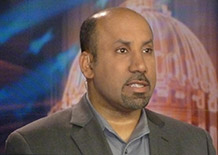
Then we take a further look at the apparent lack of interest in the press as evidence grows from declassified documents from the 9/11 Commission, of Saudi Arabia’s possible involvement in 9/11 that little to no attention has been paid to in spite of the trauma of 9/11 and the trillions spent on security since. Ali Al-Ahmed, the founder and director of the Institute for Gulf Affairs joins us to discuss the powerful influence of Saudi money in Washington that has succeeded in portraying Saudi Arabia as an indispensable ally even though much of the instability in Afghanistan, Pakistan, Iraq, Syria, Somalia and Nigeria can be traced to Saudi-financed sectarian hatred and extremist religious ideology. |
 |
|
|
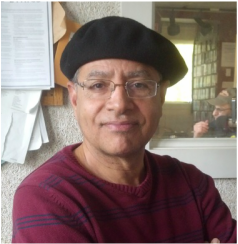
Then finally we speak with Ali Abdullatif Ahmida, a Professor of Political Science at the University of New England and author of “The Making of Modern Libya”. He joins us to discuss the decision to arm the UN-backed Libyan government following talks in Vienna even though Prime Minister Sarraj’s government in Tripoli does not control the west of the country which is under the control of General Haftar who is supported by Egypt and the United Arab Emirates. We assess the chances that the new government has of defeating the Islamic State which has a strong foothold in this chaotic county with over 1,500 competing militias. |
 |
|
|
LISTEN TO FULL PROGRAM | |
|
|
We begin with the growing pressure on President Obama to declassify the 28 pages of the joint Congressional inquiry into the 9/11 attacks that some who have read the pages say implicate Saudi Arabia. Philip Shenon, who was the lead reporter for The New York Times on the investigation of the 9/11 commission and author of “The Commission: The Uncensored History of the 9/11 Commission”, joins us to discuss his latest article at The Guardian “Declassified Documents Detail 9/11 Commission Inquiry into Saudi Arabia”. And also joining us is Robert Baer, a veteran CIA officer who served in the Middle East and is now the national security affairs analyst for CNN. He is the author of “Sleeping with the Devil: How Washington Sold our Soul for Saudi Crude” and we discuss the evidence in the public domain so far of Saudi involvement in the 9/11 attacks from the files of the 9/11 commission staff that detail a chronology of how the investigation was conducted, including how the panel’s investigators flew to Saudi Arabia for face-to-face interviews with Saudis believed to be part of the hijacker’s support network on American soil. |
|
|
|
Then finally we speak with Sidney Blumenthal, the former assistant and senior adviser to President Bill Clinton and senior adviser to Hillary Clinton. He is author of the new book just out, “A Self-Made Man: The Political Life of Abraham Lincoln Volume 1, 1809-1849” and we discuss the early life of the founder of the Republican Party that today with Donald Trump as its standard bearer, is reverting back to its incarnation in the early 1850’s as the American Party of the anti-immigrant “Know Nothing” movement. We also discuss the endless scandals surrounding Hillary Clinton, the latest of which involve her email server that was not hacked, whereas the State Department server critics say she should have used, was hacked by the Chinese. |
 |
|
|
LISTEN TO FULL PROGRAM | |
|
|
We begin with the meetings today on Capitol Hill between Donald Trump and Republican leaders including Speaker Paul Ryan and speak with a long-time senior congressional staffer Mike Lofgren, the author of “The Party is Over: How Republicans Went Crazy, Democrats Became Useless, and the Middle Class Got Shafted”. We discuss the possibility that as former speaker John Boehner suggested, Mr. Ryan was looking to “help shape” Trump’s policies and examine the extent to which the struggle between Trump and the Republican establishment is not about unity but is more about Trump being brought into line to abandon his populist promises to raise taxes on the rich and preserve Social Security. We look into whether Trump could be handled to follow the game plan of hyping the deficit as a distraction to justify the sacrifices working and middle class Americans are expected to make while the GOP cuts taxes on the top 1%. |
 |
|
|
Then, now that the President of Brazil is facing impeachment, we will try to get some clarity of what is behind this political upheaval in a country that in three months from now will be hosting the Olympic Games. Alexander Main, the Senior Associate for International Policy at the Center for Economic and Policy Research joins us to discuss the extraordinary turn of events that have replaced an elected president half way through her term on specious grounds involving vague charges with a much more unpopular replacement from another party who is mired in legal troubles and corruption charges. |
 |
|
|
Then finally we go to Italy to speak with the economist Randall Wray, professor of Economics at Bard College and a Senior Scholar at the Levy Economics Institute about the economic repercussions of a so-called Brexit if the U.K. were to leave the E.U. following the June 23rdreferendum. We look into whether the E.U. could unravel and how a Brexit could affect the American economy and the upcoming elections. We also discuss his latest book “Why Minsky Matters: An Introduction to a Maverick Economist”. |
|
|
|
LISTEN TO FULL PROGRAM | |
|
|
We begin with comments by Britain’s Prime Minister Cameron caught on a “hot” mic ahead of the international conference on corruption that he is hosting, remarking that Afghanistan and Nigeria are “fantastically corrupt” countries. A former career Foreign Service Officer and U.S. Ambassador to Nigeria, John Campbell, the author of “Nigeria: Dancing on the Brink”, joins us to discuss the rampant corruption in Nigeria where millions have been stolen by generals undermining the military’s ability to fight the Boko Haram insurgency, and billions routinely go missing inside the National Oil Company before oil revenues get to the Nigerian treasury. While trillions are stolen from developing countries who can least afford it, we will also address the role of big banks and offshore havens where most of the stolen money ends up. |
 |
|
|
Then we look into the possibility that child care and paid family leave will be an important if not central issue in the Democratic presidential campaign following remarks by Hillary Clinton in Kentucky on Tuesday where she laid out an agenda to make child care better and more affordable in the country. Helen Blank, Director of Child Care and Early Learning at the National Women’s Law Center, who served 24 years as the director of the Child Care and Development Division of the Children’s Defense Fund, joins us to discuss how far the U.S. is behind other advanced democracies in making child care for working families available and affordable and what can be done to catch up. |
 |
|
|
Then finally we navigate through the political turmoil in Brazil following an off-again-on-again impeachment of President Dilma Rousseff in the lower house and her failure to get the Supreme Court to stop the Senate that is now poised to impeach her. Maria Luisa Mendonca, director of Brazil’s Network for Social Justice and a professor in the International Relations Department at the University of Rio De Janeiro, joins us to discuss what she sees as a “coup” against an elected president based on specious charges that, three months before the Olympics in Brazil, are likely to lead to increased political instability and paralysis. |
 |
Taking listeners deep into the underlying issues and forces that shape our world.
Listen Live on KPFK FM-90.7 - Los Angeles (98.7 FM Santa Barbara, 99.5 FM China Lake, 93.7 FM San Diego)
Listen on Itunes
LA: Background Briefing Monday-Thursday 5pm-6pm and Sundays 11am-12pm
NY: on WBAI 99.5 FM Monday-Friday 5am-6am and rebroadcast at 10am
Also heard on:




 RSS Latest Radio Programs
 Pacifica App