Background Briefing has a new home at BackgroundBriefing.org.
Please visit and bookmark the new site. You can search show archives here.

Background Briefing has a new home at BackgroundBriefing.org.
Please visit and bookmark the new site. You can search show archives here.
|
|
LISTEN TO FULL PROGRAM | |
|
|
We begin with the executive action on gun safety announced today at the White House with President Obama tearing up as he recalled the massacre of elementary school children at Sandy Hook and the NRA’s grip on Congress that blocked the demand of a majority of Americans that military-style weapons be kept out of the hands of criminals and the mentally ill. A 30-year law enforcement veteran who served as a special agent with the Bureau of Alcohol, Tobacco and Firearms, Dr. William Vizzard, Professor Emeritus and Chair of the Division of Criminal Justice at California State University, Sacramento and author of “In the Crossfire: A Political History of the Bureau of Alcohol, Tobacco and Firearms” joins us to discuss how Obama can get around the Congress to hire more ATF agents to improve federal gun licensing and more FBI personnel to conduct background checks. |
 |
|
|
Then we speak with the co-author of a new study that examines the underlying dynamics of income inequality based on 35 years of data from the Social Security Administration that finds the top quarter of the one percent are pulling away from the rest of us. Fatih Guvenen, a Professor of Economics at the University of Minnesota who is currently a visiting professor at Yale University and a research consultant for the Federal Reserve Bank of Minneapolis, joins us to discuss the issue of income inequality that dominated the annual meeting of the American Economic Association. |
|
|
|
Then finally we speak with Mike Lofgren about his new book “The Deep State: The Fall of the Constitution and the Rise of a Shadow Government”. He spent 28 years working in Congress, the last 16 as a senior analyst on the House and Senate Budget Committees, and we will discuss the contradictions created by the deep state where the rich are getting richer as the poor get poorer in the land of opportunity, with the country in perpetual war while standing for peace, and while Americans talk of freedom, they are living in the surveillance state. |
|
|
|
LISTEN TO FULL PROGRAM | |
|
|
We begin with the standoff in Oregon between as a self-declared group of armed “patriots” who have occupied government buildings and the FBI who are exercising patience and restraint. Thomas Mockaitis, a Professor of History at DePaul University who has taught counter-terrorism courses as part of the Department of Defense Counter-terrorism Fellowship Program, joins us to discuss his article at The Huffington Post “Stop Calling Terrorists Militiamen” and the double standard of white extremists playing soldiers in the Oregon woods who are at best criminals and at worst domestic terrorists, and Black Lives Matters and Occupy protesters who if armed, would provoke a much more aggressive response from the authorities. |
 |
|
|
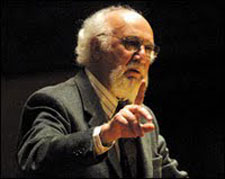
Then we speak with revolutionary Iran’s first Ambassador to the United Nations, Mansour Farhang, a professor of international relations at Bennington College, about the growing confrontation between Iran and Saudi Arabia where on both sides hardliners want to distract the domestic discontent of their restive publics facing economic hardship by stoking nationalist fervor. And following the execution of a prominent Shiite cleric by the Saudis, we will also discuss the abysmal human rights records on both sides with Saudi Arabia having executed 168 people last year while Iran conducted 694 executions of mostly political prisoners. |
 |
|
|
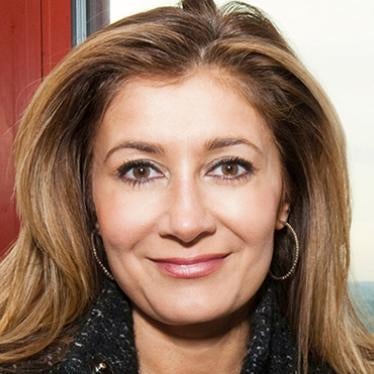
Then finally we look into the appalling human rights situation in Saudi Arabia where any criticism of the king could result in death and where anti-terrorism laws are used to stifle any dissent and justify capital punishment that usually involves beheading but can include crucifixion. Sarah Whitson, the executive director of Human Rights Watch’s Middle East and North Africa Division joins us to discuss the Saudi government’s disregard for human rights while at the same time it spends hundreds of millions on public relations efforts to improve its international image. |
 |
|
|
LISTEN TO FULL PROGRAM | |
|
|
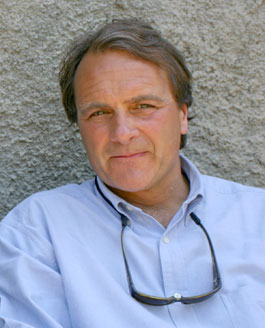
We begin with a veteran Middle East CIA operative Robert Baer, who is now a best-selling author and the national security affairs analyst for CNN. He joins us to discuss whether 2016 will be the year that we dig ourselves deeper into the Middle East quagmire or finally extricate ourselves which was clearly the objective of President Obama before the Islamic State beheaded an American journalist on video. We discuss whether rationality and proportionality in terms of our overheated reaction to the minor threat of ISIS compared to what we faced in the Cold War are possible in an election year environment. |
 |
|
|
Then we look into the already raucous and even raunchy domestic political arena ahead in this election year as unconventional political candidates on the Republican side push the bounds of civil discourse while on the Democratic side the Party establishment seems to be going out of their way to bury the presidential candidate who is drawing the biggest crowds while protecting the front-runner from any self-inflicted wounds which seems remote given Hillary Clinton’s disciplined and confident presence in the debates that the DNC apparently didn’t want Americans to watch. John Nichols, The Nation magazine’s Washington correspondent and author of “Dollarocracy: How the Money and Media Election Complex is Destroying America”, joins us to discuss populist energy on the left and anger on the right and whether the DNC’s attempts to marginalize Bernie Sanders will drive young voters away from the polls, as well as whether the angry insults from Donald Trump with eventually catch up on the Republican frontrunner who continues to climb in the polls. |
 |
|
|
LISTEN TO FULL PROGRAM | |
|
|
Today we first look into the major foreign policy stories of the year and then examine the top domestic issues. We begin with Roger Morris who served on the Senior Staff of the National Security Council under Presidents Johnson and Nixon and is the author of “Between the Graves: America, Afghanistan and the Politics of Intervention” and “Kindred Rivals: America, Russia and Their Failed Ideals”. We will discuss the paradox that Americans are insecure while the country has the most powerful military in the world and spends over 60% more on defense today than it did during the Cold War. And we will also assess the likelihood that America could be led by a reckless neophyte whose personality, narcissism and amorality has more in common with ego-driven dictators like Putin and Erdogan than any other American leader in our history. |
 |
|
|
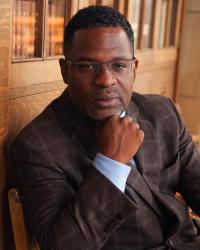
Then we cover the stories that dominated the domestic political arena in 2015 with Chris Parker, a professor of Social Justice and Political Science at the University of Washington who is the principal investigator of the “Multi-State Survey on Race and Politics” and Director of the Center for Survey Research at the University of Washington. He is the author of “Change They Can’t Believe In: The Tea Party and Reactionary Politics in America” and we discuss how race relations came to dominate the news in 2015 with riots in Ferguson, Missouri and Baltimore, along with police shootings of black men and boys in Cleveland, South Carolina and Chicago that used to happen in the shadows and were routinely covered up but now are seeing the light of day thanks to i-Phone videos and dash-cams on police cars and body-cams on police officers. |
 |
|
|
LISTEN TO FULL PROGRAM | |||
|
|
Today we look into the growing doubts about our relationship with our so-called ally Saudi Arabia and begin with a program broadcast on April the 22nd of this year in which we examined the unexplored avenues of inquiry into the untold story leading up to 9/11 and its aftermath, in particular the role of Saudi Arabia since 15 of the 19 hijackers were Saudi citizens. Senator Bob Graham, the former chairman of the Senate Intelligence Committee and the co-chairman of the 2002 joint congressional inquiry into the 9/11 terrorist attacks, joined us to discuss his push for the disclosure of the 28 pages of the congressional inquiry that remain classified and the extraordinary coincidences involving meetings between Saudi officials and the hijackers in San Diego and ties between the hijackers and a Saudi family in Sarasota, Florida who abruptly left the U.S. under suspicious circumstances just before 9/11.
|
|
||
|
|
We now go to a program broadcast on December the third in which we speak with Ali Al-Ahmed, the founder and director of the Institute for Gulf Affairs about the need for less Saudi Wahhabi influence and more diversity in Islam as American Imams and Islamic Scholars once again find themselves on the defensive, repeating clichés that “Islam is a religion of peace” to an increasingly skeptical American public that is more and more susceptible to the kind of Islamophobic ignorance being spread by Republican presidential candidates like Donald Trump and Ben Carson.
|
 |
Taking listeners deep into the underlying issues and forces that shape our world.
Listen Live on KPFK FM-90.7 - Los Angeles (98.7 FM Santa Barbara, 99.5 FM China Lake, 93.7 FM San Diego)
Listen on Itunes
LA: Background Briefing Monday-Thursday 5pm-6pm and Sundays 11am-12pm
NY: on WBAI 99.5 FM Monday-Friday 5am-6am and rebroadcast at 10am
Also heard on:


 RSS Latest Radio Programs
 Pacifica App